
New Amateur Radio Station for Emergency Response
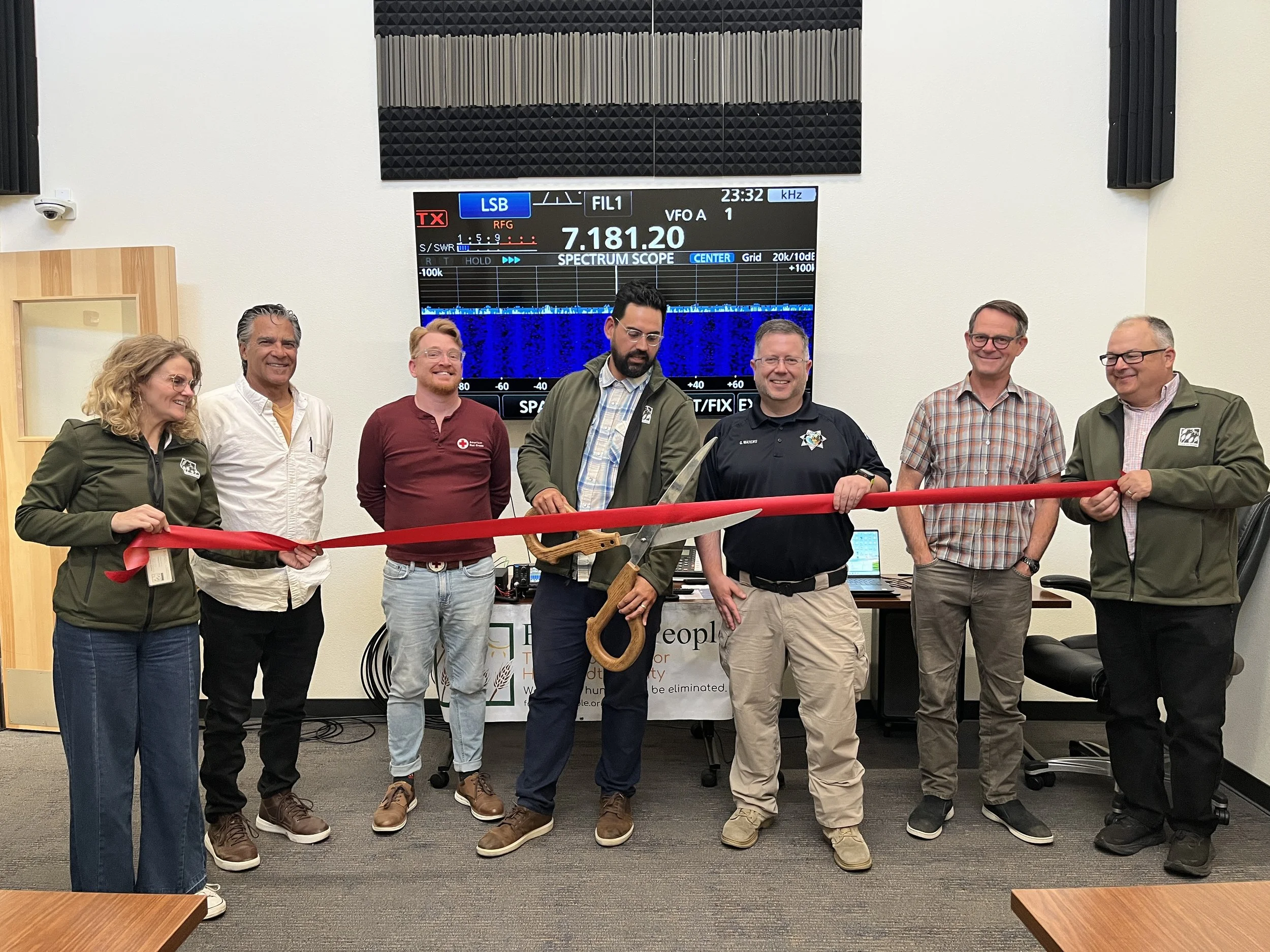
Pictured L to R: Carly Robbins, FFP Executive Director, Gary M. Bird, FFP Board President, Jake Fender, American Red Cross, Robert Sataua, FFP Emergency Food Response Coordinator, Greg Waters, Humboldt OES, Randy Terra, Humboldt Amateur Radio Club, David Reed, FFP Development Director
Food for People officially unveiled its new Amateur Radio Station during a ribbon-cutting ceremony on Monday, July 27.
Spearheaded by Robert Sataua, Food for People’s Emergency Food Response Coordinator, the new communications system includes both UHF/VHF and HF amateur radio equipment, providing reliable alternatives when disasters disrupt cellular networks, internet service, and other traditional communication systems. During a major emergency, maintaining communications is critical. The radio station will enable Food for People to coordinate with local partners to assess community needs, identify gaps in services, and prioritize response efforts. It also provides a direct means of communicating with organizations outside Humboldt County that can help coordinate additional resources and support when local capacity is overwhelmed.
Food for People strengthened these capabilities by participating in the statewide BEACON (Building Emergency Area Communications, Operations, and Networks) exercises in 2024 and 2025. These large-scale disaster simulations provided opportunities to test alternative communication systems, strengthen coordination with partner agencies, and prepare for emergencies that could impact Humboldt County.
The project was made possible through funding provided by the American Red Cross. The station’s design, implementation, and emergency communications planning were developed in partnership with Humboldt County OES and the Humboldt Amateur Radio Club, whose expertise helped ensure the system is ready to support disaster response efforts throughout the region.
The Radio Station represents Food for People’s ongoing work to ensure that, even when conventional systems fail, the organization can remain connected with emergency partners and continue coordinating the delivery of critical food assistance to the community when it is needed most.